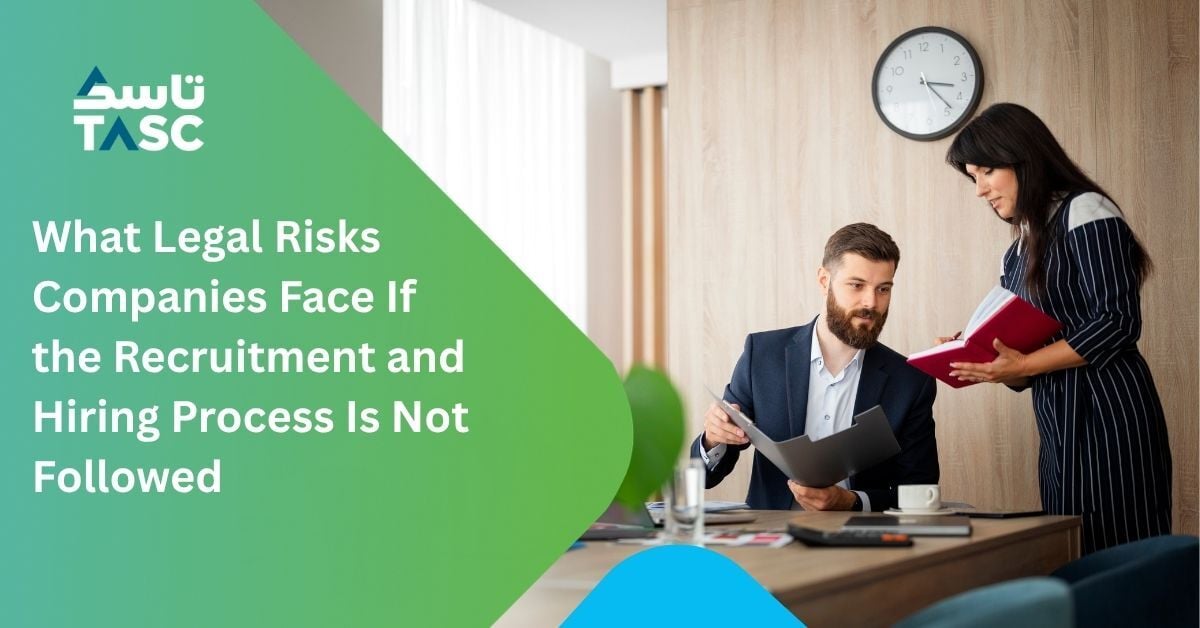
What Legal Risks Companies Face If the Recruitment and Hiring Process Is Not Followed
Failing to follow these steps can create serious legal and financial risks. Performing the hiring process in a disorganized way can lead to legal and financial issues for the company that are quite serious. So even if you are using recruitment agencies in UAE or handling your hiring internally, a proper, legally compliant process must be a priority.
Discrimination Claims
Hiring discrimination is a common reason why companies end up in court. Discrimination laws aim to protect various groups of job seekers from unfair treatment based on characteristics like race, nationality, gender, age, religion, or marital status.
In the absence of a formal hiring system, the way you conduct interviews can be grounds for illegal practices. When hiring practices are not documented and objectively based on professional merits only, it is going to be quite a challenge to prove in court that your hiring decision was fair. The losing candidates can then sue for damages, a scenario that is both costly and damaging to the public image of your business.
Negligent Hiring Lawsuits
The failure to perform proper background checks on employees prior to hiring them may result in a company being held liable for the actions that these employees commit later on. This legal principle, which holds that a company can be responsible for hiring an employee who subsequently causes harm because the company was negligent in checking their background prior to hiring, is referred to as "negligent hiring."
If a person who has been hired as a delivery driver is not subjected to a background check regarding their driving record and they cause a very serious accident while carrying out the duties of their job, the person who has been injured can sue the company that hired the driver for the company's failure to do a simple background check.
Violations of Local Labor Laws and Visas
Each labor market is regulated by its own very strict set of labor laws. If for example, you are operating in the Middle East, working with established recruitment companies in UAE can be a good way of ensuring that you comply with the very complicated and not obvious local rules.
If your internal team overlooks some parts of the hiring process, you may inadvertently violate local laws concerning:
- Minimum wage requirements
- Mandatory health insurance coverage
- Working hour limitations
- Proper employment visa processing
Letting an employee begin working before the approval of their legal work permit or residency visa is completed may result in a collection of very large fines by the government, the deportation of the worker, and even the prohibition of your company from hiring foreign talent in the future.
Breach of Contract Issues
Implementing a structured hiring process involves sending formal offer letters and entering into legally binding employment agreements. When organizations are in a hurry, they usually resort to using generic contract templates found online or verbal promises made during interviews that they may not be able to fulfill.
If a supervisor during a phone conversation promises an applicant a sure annual bonus, but the bonus is not included in the final written contract, the employee can later take legal action against the company for breach of contract. A formal procedure guarantees that all communications are recorded, standardized, and legally vetted.
Data Privacy Violations
Candidates provide a large amount of personal information during the recruitment phase. This assortment of data includes home address, phone number, passport copy, bank details, and past medical records.
Most nations have enacted stringent data protection rules specifying how such personal data should be stored and disposed of. If your HR staff, for example, leaves printed CVs unattended on desks or keeps candidate passports in an unencrypted email folder, your company may be violating data privacy laws. In case there is a data breach and the personal information of candidates is stolen, your company will not only be subject to heavy legal penalties but also to fines of considerable magnitude.
The Value of Professional Help
There are businesses that, despite the urgent need to avoid these kinds of dangerous mistakes, simply cannot do without their external consultants completely. They rely on them to carry out an audit and take charge of their talent acquisition. Bestresources recruitment & consulting is an example of a reliable partner with whom working together can help you reconcile the seemingly irreconcilable gap of getting the job done quickly and maintaining an uncompromising level of legal compliance. Professional consultants deliver well-organized systems that ensure your business remains protected at each point of the interviewing and onboarding process.
Shield Your Enterprise with TASC Outsourcing
Don’t let careless recruitment expose your company to costly lawsuits and government fines. TASC Outsourcing is a leading manpower and human resources solutions company in the UAE, supported by more than 18 years of local experience. We manage your whole recruitment process from compliant sourcing and screening to visa processing, payroll, and local labor law compliance. Reach out to TASC Outsourcing now to create a safe, completely compliant, and highly productive workforce for your enterprise.
Frequently Asked Questions
1. What does "negligent hiring" mean for a business?
Negligent hiring means a situation where an employer hires an employee without checking the worker's background, and that worker later causes harm to a client, coworker, or member of the public. The law holds the employer responsible for the worker's actions, assuming the employer should have known the worker was a danger if they had simply checked their background properly.
2. Can a job applicant sue my company if they didn't get the job?
Yes. If an applicant thinks they were denied the job due to their race, sex, age, religion, or nationality rather than their abilities, they can file a discrimination claim. To have a defense, keep a documented, uniform interview process that will help the company demonstrate that their hiring choices were made fairly.
3. Why are verbal job offers dangerous?
Promises made verbally during interviews and phone calls can be interpreted as legally binding in many judicial systems. If the hiring manager promises certain benefits or salaries and then it turns out the company cannot provide them, the employee may have the grounds to sue for breach of contract leading to a significant cost for the company.
4. What risks come with allowing someone to start work before their visa is ready?
For instance, in the UAE, it is a serious violation of the law to allow a foreign worker to perform a job without having a valid work permit or proper visa status. This infringement results not only in the business being subjected to very heavy fines but also may even expose managers to legal action.
5. In what way does a standard hiring procedure safeguard candidate information?
A well-designed process guarantees that all CVs, copies of passports, and background checks remain locked up securely in a compliant applicant tracking system. By doing so, it helps your organization to steer clear of the data privacy laws that impose sanctions on companies for the improper handling of private citizen information.